AI Prompts for Yacht & Superyacht Lifestyle Photos
How to generate photorealistic AI images of yacht decks, superyacht interiors, and marina settings — prompt techniques for luxury maritime lifestyle photography.
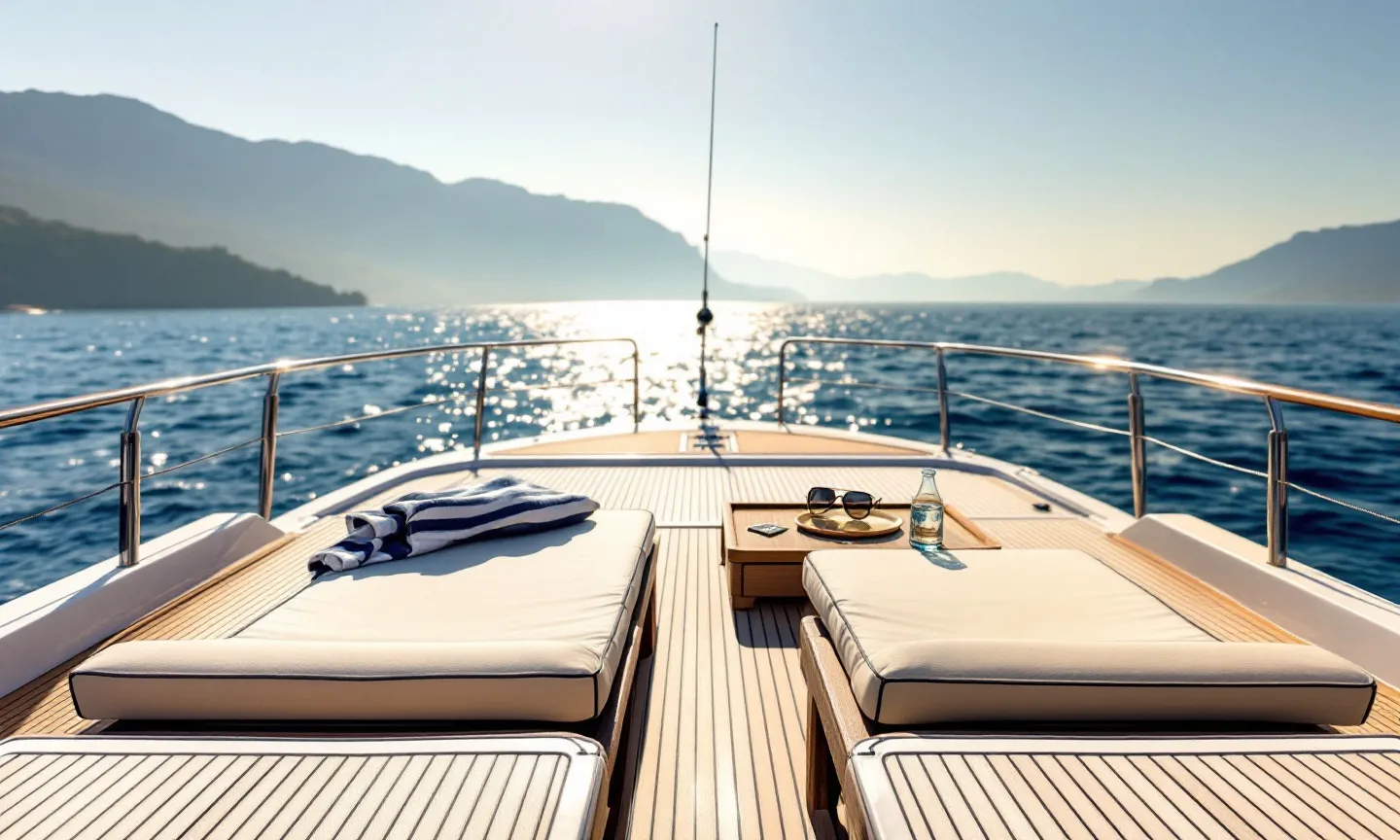
The yacht is one of the most immediately legible luxury symbols in lifestyle photography. Open water. Teak decking. The kind of light that only exists on the Mediterranean at 4pm. No caption required — the setting communicates everything before the subject is even in focus.
AI generates yacht content that ranges from convincing to spectacular, entirely depending on how you prompt it. Here's how to get to spectacular.
Why Yacht Prompts Respond So Well to AI
Unlike some luxury subjects, yacht photography follows a relatively consistent visual grammar. The materials are recognizable: teak deck planking, stainless-steel railings, white fiberglass hulls, cream and navy upholstery. The environments are distinctive: blue-green Mediterranean water, harbor towns like Monaco or Portofino visible in the background, clear skies with hard directional sunlight.
AI models have been trained on enormous volumes of real yacht photography — from shipyard brochure shots to travel-editorial spreads. When you describe this vocabulary accurately, the model draws on high-quality training material. Generic prompts produce generic results; specific prompts produce images that look like they came from a Benetti or Feadship catalog.
Main Deck and Bow Shots
The deck is the signature composition for yacht lifestyle content. The spatial relationship between the subject, the boat, and the water behind creates an immediately recognizable image type.
The bow shot. "Standing at the bow of a large white motor yacht, open Mediterranean sea stretching to the horizon, wearing a white linen shirt and tailored navy shorts, hand resting on the stainless railing, late afternoon light from camera right creating long shadows on the teak decking, shot on a wide lens from slightly below eye level." The bow is inherently dramatic — it puts the subject at the leading edge of the frame with open water behind. The below-eye-level angle accentuates the yacht's scale.
The aft deck lounge. "Seated on a sun lounge chair on the aft deck of a superyacht, cream upholstery, teak decking, infinity stern platform at the edge, blue-green sea behind, sunglasses, cocktail in hand, late golden hour, warm ambient light, editorial lifestyle photography." This is the iconic social-media yacht shot. Relaxed, aspirational, clearly identifiable as the stern of a serious yacht.
The flybridge view. "Standing on the flybridge of a 50-meter motor yacht, elevated view looking down at the main deck and bow, open sea ahead, another yacht visible at distance, wearing a lightweight navy jacket, one hand on the helm console, late afternoon, editorial marine photography." The elevated perspective communicates the scale of the vessel and gives the viewer a captain's-eye view.
Superyacht Interiors — Saloon and Cabin
Interior shots require more descriptive precision than deck shots because the materials and proportions vary more widely between vessels.
The main saloon. "Interior of a modern superyacht saloon, floor-to-ceiling panoramic windows looking out onto open sea, cream and ivory upholstery on low-profile sofas, lacquered walnut cabinetry, marble coffee table, a man in a light grey turtleneck seated reading, natural light pouring in from starboard windows, subtle interior accent lighting, interior design photography style." The key elements: the panoramic windows (standard on larger yachts), the material quality (lacquered wood, marble, leather), and the light source (the sea-view windows are always the dominant light in a yacht saloon).
The master cabin. "Master cabin of a luxury yacht, queen-size bed with white Egyptian cotton linens, porthole windows on both sides showing turquoise water, warm interior lighting, dark walnut wood panels, a dressing mirror reflecting the cabin, morning light." Porthole windows are the signature interior element — they communicate the maritime setting immediately even in an otherwise indistinguishable luxury interior.
Marina and Harbor Settings
The stationary yacht in a recognizable harbor is a distinct content category — less about open water, more about the relationship between the boat and a specific luxurious location.
Monaco harbor. "Stern of a white superyacht moored in Monaco harbor, Fontvieille Marina in the background, characteristic Monaco hillside apartments visible, late afternoon golden light, a man in a linen suit stepping from the swim platform onto the dock, crisp and editorial." Monaco is the most recognized luxury yachting destination — naming it gives the AI a specific visual reference that it renders with architectural accuracy.
Portofino arrival. "Moored off Portofino, Italy, pastel-colored village buildings visible on the hillside, turquoise water, a tender approaching the swim platform of a large white yacht, dressed in resort wear, warm Mediterranean light." The Portofino color palette (terracotta, ochre, pale green buildings against deep blue water) is so distinctive that naming it produces an immediately recognizable environment.
Generic aspirational marina. "Moored in an exclusive private marina, other large yachts in berths alongside, clean white dock, late golden hour, dressed in smart casual, approaching the yacht gangway." When you don't need a specific location, this produces clean, non-polarizing marina content.
Naming Yacht Builders and Models
Like car prompts, yacht prompts benefit from naming specific vessels because AI models have training data from real photography of recognizable boats.
Feadship yachts are known for sleek white hulls with minimal exterior detailing and modernist interiors. "Feadship motor yacht" in a prompt signals a refined, restrained aesthetic.
Benetti yachts tend toward Italian styling — warmer tones, more decorative interior details, a slightly more opulent visual language. "Benetti superyacht interior" produces something materially different from a Feadship interior.
Sunseeker (particularly the Predator and Manhattan series) has a sportier, more aggressive exterior design language. Works well for prompts with speed and motion elements rather than anchored luxury.
Azimut is broadly recognizable as the mid-large luxury motor yacht standard — clean white hulls, modern exterior, good for generic aspirational content where a specific builder isn't the point.
Lighting Conditions That Work Best
Mediterranean afternoon (3–5pm). The light is warm but not yet golden — directional enough to create depth on surfaces, soft enough not to blow out the white hull. This is the standard yacht photography condition because it balances the blue water, the white boat, and the subject without any element dominating.
Golden hour. Warm horizontal light catches on the teak and the water surface simultaneously, creating a unified warm-tone image. Works especially well for bow and flybridge shots where both the boat and the horizon are in frame.
Blue hour moored. The transition period after sunset, with the yacht lit by interior lighting against a deep blue sky and water. Strong for harbor settings — the interior light against the exterior darkness creates an aspirational warmth.
Technical Notes for Yacht Prompts
Teak decking is a detail worth naming specifically. It identifies the surface as yacht-grade and produces the characteristic warm-brown planking with white seams. "Teak decking" or "teak and holly sole" renders visually differently from a generic wood or concrete surface.
Hull color affects the entire image. White hulls are most common and reflect the water and sky — they produce clean, aspirational images. Dark navy or midnight blue hulls are more editorial and dramatic. Specify the hull color explicitly to control the image's tonal quality.
Water conditions matter. "Flat calm turquoise water" produces a different image than "gentle Mediterranean chop." Flat calm shows reflections; slight chop shows movement and life. For anchored shots, calm water. For underway or tender-approach shots, light chop adds realism.
Getting Started
The PROMPTMVSTR luxury travel archive includes yacht and maritime prompts tested against the current Gemini model. Browse any prompt tagged under luxury travel — copy the exact text, adapt the yacht type or harbor location to your preference, and pair it with your face reference photo for a Virtual Photoshoot that places you on board.